I left the meeting and walked for thirty minutes under an umbrella to digest it. Do we actually understand what game the world is starting to play?
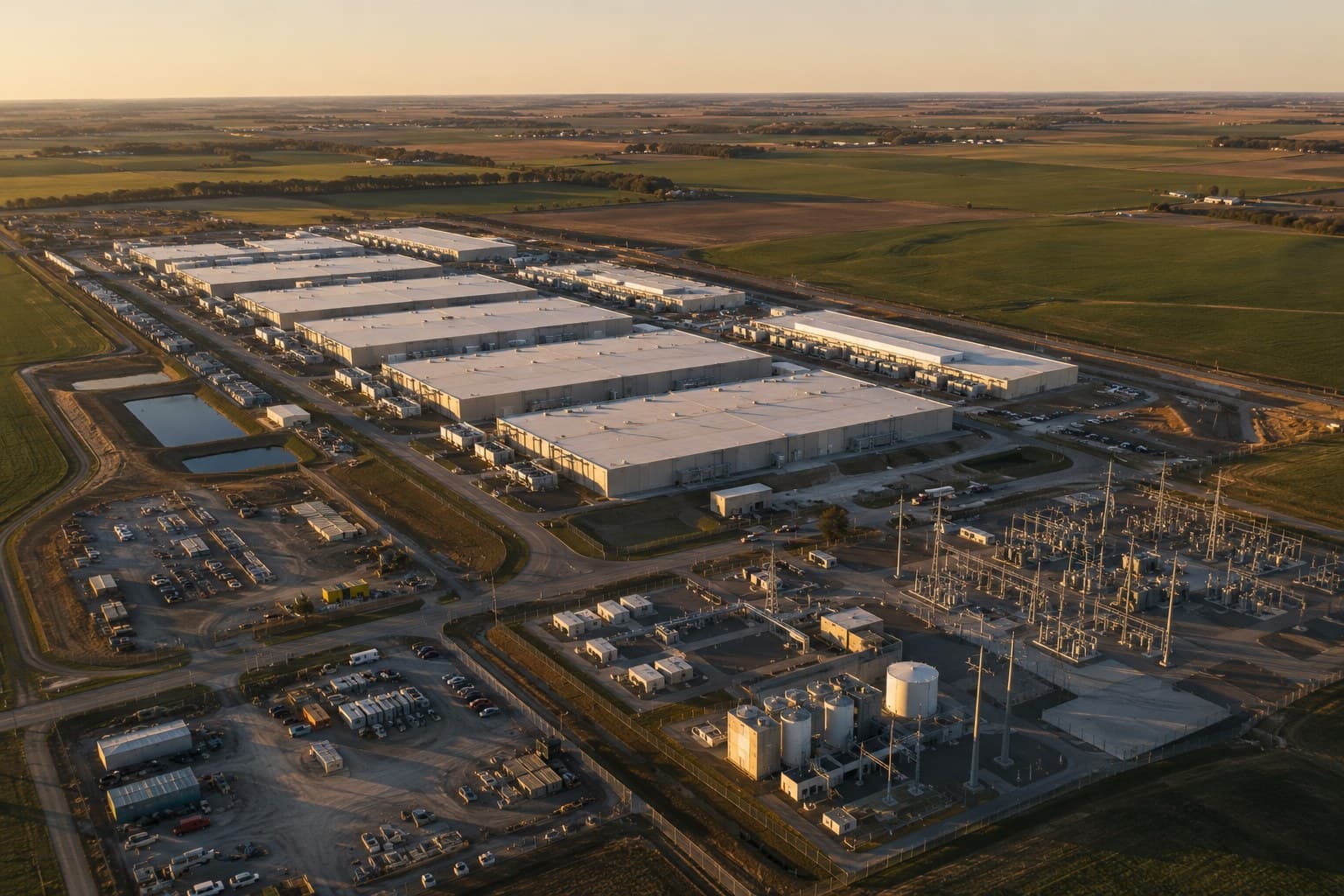
The rules are changing very fast, and globally. What everyone raves about as an AI story has something underneath it that is not code: electricity and land.
The world is breaking apart into competing economic regions and blocs, and the struggle over energy is already under way. Which is to say the world has entered the zone of the unthinkable future: ahead of us are a structural crisis and a break-up into competing blocs. The United States and China are already running into that future — microprocessors, AI, autonomous energy — and remarkably few people notice.
There are only a handful of countries in the world that would survive on their own if you put a fence around them. The United States. Brazil. Canada. Australia. China. Ukraine.
Egypt without imported grain is famine within months. Japan without oil. Most of Europe is structurally dependent on somebody else's resources. We could feed half the world and heat the other half. Atom, grain, metal, water, technology, fertile land — all of it physical, all of it right now.
That is not patriotic rhetoric. It is a geopolitical fact that Ukraine itself understands poorly. So why are we poor?
We really do have everything except the main thing. We are entering this historic moment without an economic model and without a strategy even ten years ahead.
If after victory we go back to what was — one per cent GDP growth a year, oligarchs dividing the assets between them, a middle class that never recovers, a demographic crisis — then in ten years we will not exist as an economic subject. We will be eaten. Not by rockets. By competition.
Here is the simple arithmetic of geopolitics. Either in the next ten years we find economic allies with whom to build a market of at least a billion consumers, or we are eaten in the next technological cycle.
Fortunately everyone else has the same problem, which is why the answer is blocs. Europe is not an example for us and we cannot follow its path: its technological economy is stagnating.
And there is a second reason, closer to home. Without the creation of a powerful middle class, and with a very large quantity of uncontrolled weapons, the country will simply tear itself apart from the inside. The absence of a middle class is cured only by large development projects, of the kind Roosevelt ran in the United States. In other words we need not cosmetics but a new operating system for the economy.
We do not need a stable economy and we do not need the old one repaired. We need to take a risk and make a leap.
Which brings me to the thing people call a slogan when I say it. Large investors do not invest in politicians who change every five years. They invest in a nation that has a strategy for thirty.
And simpler still. Sovereignty is not only an army. Sovereignty is the ability to finance yourself. A poor country cannot be genuinely independent. If we want to make decisions about our own fate ourselves, we need a strong economy.
That is exactly why I keep talking about Ukrainians organising themselves. When a country has a strong public demand and a structured position, it is heard. Everything else is illusion.
So how do we jump into the next technological cycle as a partner rather than a supplicant in the new global architecture?
My view, broadly, is that the world's large financial groups should stop perceiving us as victims of war. For them we have to become the most powerful energy startup on the planet. Which is to say, only from a position of strength.
The future has already sprouted. While we fight, the world is building a new reality. Either Ukraine becomes, over the next ten years, a key technological node in an alliance with a market of a billion consumers, or it is simply eaten.
A country's security is impossible without its prosperity. We are not building data centres. We are building the economic base of our survival thirty years out.
We do not like hearing it, but the truth is plain.